
Gum Disease Treatment Califon
Protect Your Smile and Your Health

While your teeth are the star of the show in your smile, your gums are also important! These soft tissues support your teeth and are vital for oral health. Unfortunately, many people suffer from varying degrees of gum disease, a serious condition that can lead to pain, tooth loss, and other sad consequences. The good news is that our Califon team can help! We offer effective gum disease treatment to open up a brighter future for your smile.
Why Choose Califon Dental Arts for Gum Disease Treatment?
- Effective, Non-Surgical Treatment Methods
- Highly Skilled Dentist & Team
- Dental Insurance Welcomed & Maximized
What Is Gum Disease?
Gum disease is an infection of the soft tissue that surrounds the base of the teeth. It occurs when bacteria in the mouth proliferate and sneak beneath the gumline. Thereafter, they can cause inflammation and many other problems.
There are two stages of gum disease. Gingivitis is the milder form, and it does not cause permanent damage to the oral tissues. Periodontitis is more advanced and does cause lasting damage.
About half of U.S. adults have some form of gum disease, and the risk increases with age. Poor oral hygiene, smoking, and pregnancy are other significant risk factors.
Symptoms of Gum Disease

Gingivitis may cause the following symptoms:
- Bad breath that does not go away
- Swollen or red gums
- Gums that tend to bleed when you brush and floss
- Minor gum recession
If gingivitis remains untreated for too long, it may progress to periodontitis. It can cause similar symptoms to gingivitis, and it may also lead to:
- Pain while chewing
- Loose teeth
- Tooth loss
- Significant gum recession
- Dental sensitivity due to exposed tooth roots
- Changes in the fit of restorations, like dentures
How Do We Treat Gum Disease?

Before we design a treatment plan for your gum disease, we will examine your mouth. Then, we can recommend your next steps. If your condition is mild, you might be able to reverse it with an enhanced at-home oral hygiene routine. However, if the infection is more advanced, we may recommend that you undergo a procedure known as scaling and root planing.
Scaling & Root Planing
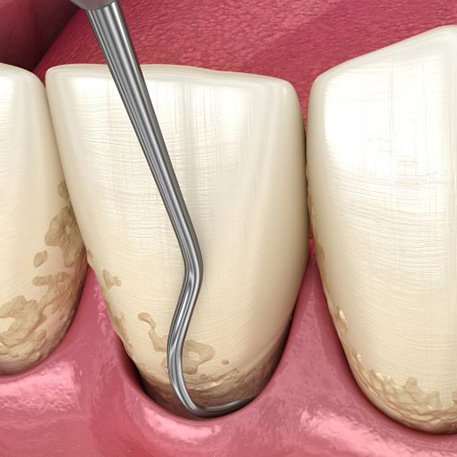
Scaling and root planing is a deep cleaning of the mouth. We use special instruments to remove plaque and bacteria from around the gumline. Then, we smooth out the roots of the teeth so bacteria cannot cling to them as easily. This thorough process can allow your gums to heal and reduce the risk of future reinfections.
Gum Disease Treatment FAQs
Does Gum Disease Affect More Than Just Your Mouth?
Although gum disease is an oral infection, it can significantly impact other systems in your body. For instance, many studies have found those who have gum disease are at a much higher risk of contracting heart disease, diabetes, Alzheimer's, kidney disease, and certain kinds of cancer. In other words, when you take care of your oral health and prevent or address gum disease, you could help your body better deal with other conditions.
Can I Get Dental Implants If I Have Gum Disease?
No, gum disease causes inflammation and impairs jawbone density. Without strong jawbone growth to surround the implant, your restored tooth will not be successful. If you have gum disease, we will need to treat and control the infection before we can consider implants for tooth replacement. We require a generally health mouth to give you the best chances of success. If you have further questions about dental implants, contact us to schedule a consultation.
What Is the Best Approach to Gum Disease?
Once gum disease has fully set in, it can cause permanent damage to your smile, which means the smartest way to approach gum disease is to prevent it entirely. Fortunately, prevention requires simple habits that we already encourage! You need to brush and floss your teeth every day and visit us at least every six months for cleanings and checkups. At-home oral hygiene routine goes a long way, but we can make sure it doesn’t advance any further and help remove hardened bacteria-filled plaque.
Does Gum Disease Ever Go Away on Its Own?
No, gum disease requires professional intervention to resolve. Our scaling and root planing can help your teeth last significantly longer than if you allow gum disease to run its permanent, inevitable course.
Also, once you get gum disease, there will always be a risk of its return. In fact, we may have to perform scaling and root planing multiple times until we’re confident that the bacteria are under control. To maintain a clean and healthy mouth, we may need to meet three times per year instead of twice for cleanings and checkups to make sure it doesn’t come back.
Is Gum Disease Contagious?
Bacteria in a person’s teeth don’t travel easily to another mouth. In other words, you can’t get it by being in the same room as an affected patient. Direct contact is needed to spread the bacteria. Unless you spend extensive time kissing or in contact with the mouth of someone with gum disease, you probably don’t need to worry about your exposure. The most important things to continue taking proper precautions like brushing, flossing, and regularly attending your dental checkups and cleanings.